Open any ads manager today and the message is the same: let the algorithm find your customers. Broad audiences, automated placements and machine-learning delivery are now the default in Meta Ads and Google Ads. The question for a business owner is not whether to use AI targeting. It is who decides what a good customer looks like, and who checks whether the platform is delivering them. That question is at the heart of human targeting vs AI targeting.
The short answer: AI is very good at finding patterns and delivering ads. It does not know your margins, your sales process or which enquiries your team actually wants. Those judgments belong to people, and they decide whether your advertising produces qualified leads or just activity.
What AI audience targeting actually does
Advertising platforms are built to deliver ads and optimize toward the objective and signals they receive. Tell Meta to optimize for link clicks and it will find people likely to click. Tell it to optimize for form submissions and it will find people likely to submit a form. In both cases it is doing exactly what it was asked, using the data it was given.
That is the limit of AI audience targeting. It can detect patterns across millions of signals and automate delivery at a scale no team could match. It cannot know that your best clients are finance directors at mid-sized firms, that a certain service area is unprofitable, or that half of your form fills never answer the phone.
Where human judgment is essential
Strategy sits upstream of the algorithm. In practice, people need to handle these decisions:
- Defining the ideal customer profile, including who to exclude.
- Understanding customer motivations, purchasing intent and pain points.
- Selecting relevant audience segments, signals and exclusions.
- Developing the offer and the advertising message that speaks to those people.
- Choosing the correct campaign objective and conversion event.
- Evaluating lead quality rather than relying only on clicks.
- Reviewing CRM outcomes and actual sales performance.
- Spotting when automated targeting is attracting low-quality traffic.
- Deciding when to change the strategy, creative, budget or audience.
Every item on that list involves business context the platform does not have. This is the foundation of a sound performance marketing strategy.
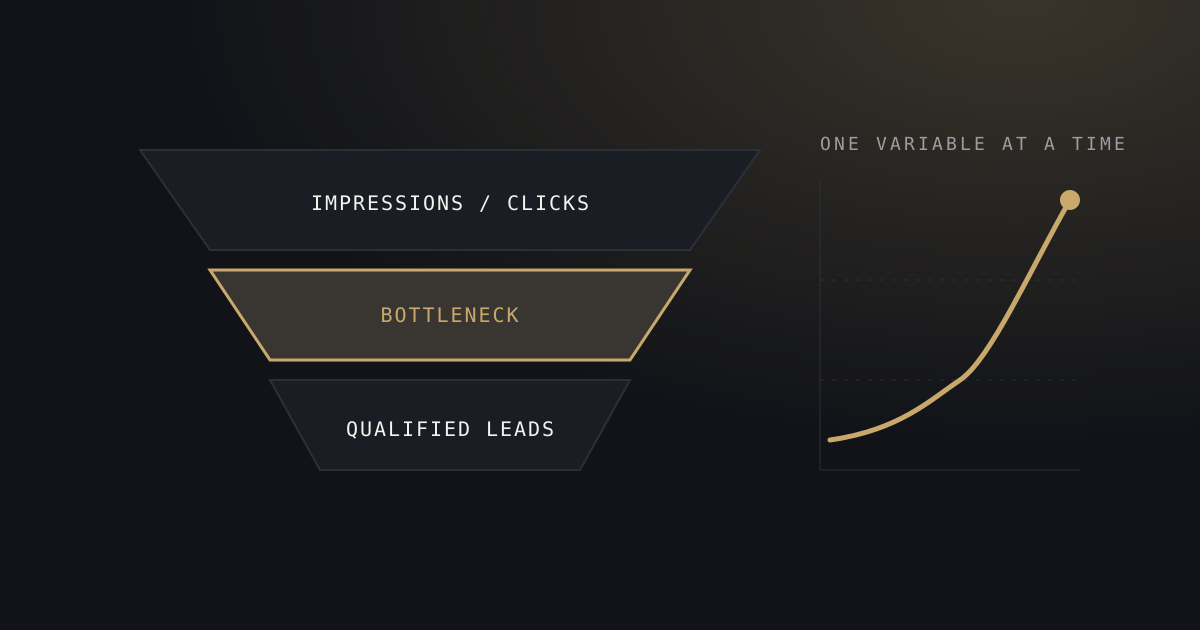
Clicks, leads, qualified leads and customers
Much wasted spend comes from treating different outcomes as if they were interchangeable. They are not.
| Term | What it means | Why it matters |
|---|---|---|
| Click | Someone tapped your ad | A sign of activity, not intent |
| Lead | Someone submitted their details | A potential conversation |
| Qualified lead | A lead that fits your criteria for budget, need and location | The first outcome worth paying for |
| Customer | A qualified lead that bought | Where revenue begins |
| Cost per lead (CPL) | Ad spend divided by leads | Useful, but blind to lead quality |
| Return on ad spend (ROAS) | Revenue attributed to ads divided by ad spend | Attributed revenue divided by ad spend. It is not profit or ROI, which also account for margins, fees and other costs |
A low CPL can hide a poor result. If most of those leads are unqualified, the real cost of a useful lead is far higher than the dashboard suggests.
An illustrative comparison: Campaign A vs Campaign B
The following numbers are illustrative. They are not real APEX case-study results.
Campaign A receives 500 clicks and generates zero leads. Campaign B receives 10 clicks and generates one qualified lead. On a traffic report, Campaign A looks fifty times busier. Commercially, Campaign B is the only one that produced something a sales team can act on.
A traffic-only scorecard might favor Campaign A. Campaign B, by contrast, has produced a qualified-lead opportunity. That is not a profit claim: without costs, close rates and sales data, neither campaign can be called profitable. The point is that traffic volume alone says little, and someone has to ask what the business actually needs. That gap between what a dashboard rewards and what the business values is where human targeting earns its place.
When AI targeting works well, and when manual controls matter
AI targeting is not inherently bad, and manual targeting is not always better. Both are tools.
AI targeting tends to work when
- Conversion tracking is reliable and the conversion event reflects real value.
- The campaign objective matches the business goal.
- There is enough conversion data for the system to learn from.
- Creative and messaging give the system useful signals about who responds.
Manual audience controls tend to matter when
- The market is niche and the relevant audience is small.
- Targeting restrictions apply, such as location, regulated products or specific job roles.
- Conversion data is thin, so the system has little to learn from.
- Reporting shows delivery drifting toward low-quality traffic.
Be realistic about the controls, too. Platforms do not always allow hard manual exclusions, and some audience options act as suggestions rather than strict limits. Where exclusions cannot be enforced, creative, offer wording, qualifying questions and lead review do more of the filtering.
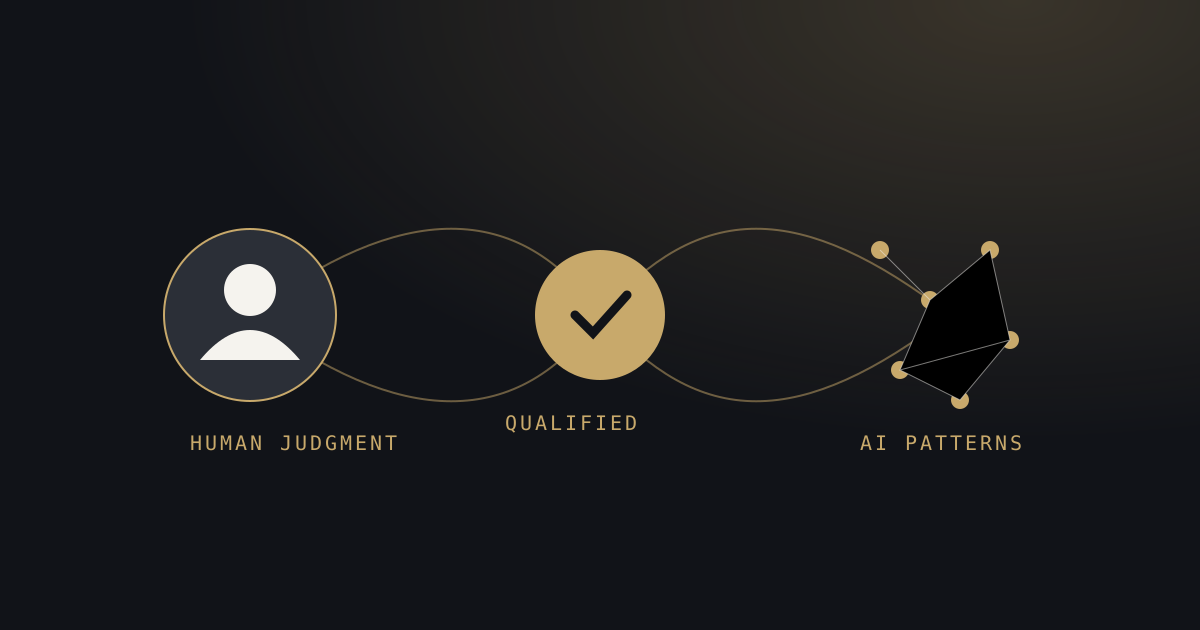
The most reliable approach is human-led, AI-assisted advertising. People define the business strategy, customer, offer, measurement framework and success criteria. AI helps with execution, analysis and optimization inside those boundaries.
Before You Trust AI Targeting With Your Budget
Run through this checklist before handing control to automated delivery.
- Have you written down your ideal customer profile and who you do not want to reach?
- Is the campaign objective tied to a business outcome rather than traffic?
- Does the conversion event represent a real lead or sale, not a page view?
- Have you tested that tracking fires correctly and only once?
- Is there enough conversion volume for the system to learn from?
- Can you see lead quality, ideally from your CRM, and not only lead count?
- Does the creative speak to the right customer, so the system learns from the right responses?
- Do you have a review rhythm and a rule for when you will intervene?
One caution on measurement: platform-reported conversions show attribution, which is not proof that ads caused the sale. Some of those customers might have converted anyway, and only incrementality testing can estimate that.
If several answers are no, the problem is not the algorithm. It is the inputs. Our guide to how to optimize digital advertising campaigns covers how to fix them, and our paid media services include tracking and measurement support.
Conclusion: activity versus outcomes
Clicks are an indicator of activity. Qualified leads and profitable customers are the outcomes that matter. AI will keep getting better at delivery, which makes human judgment about the customer, the offer and the measurement more valuable, not less.
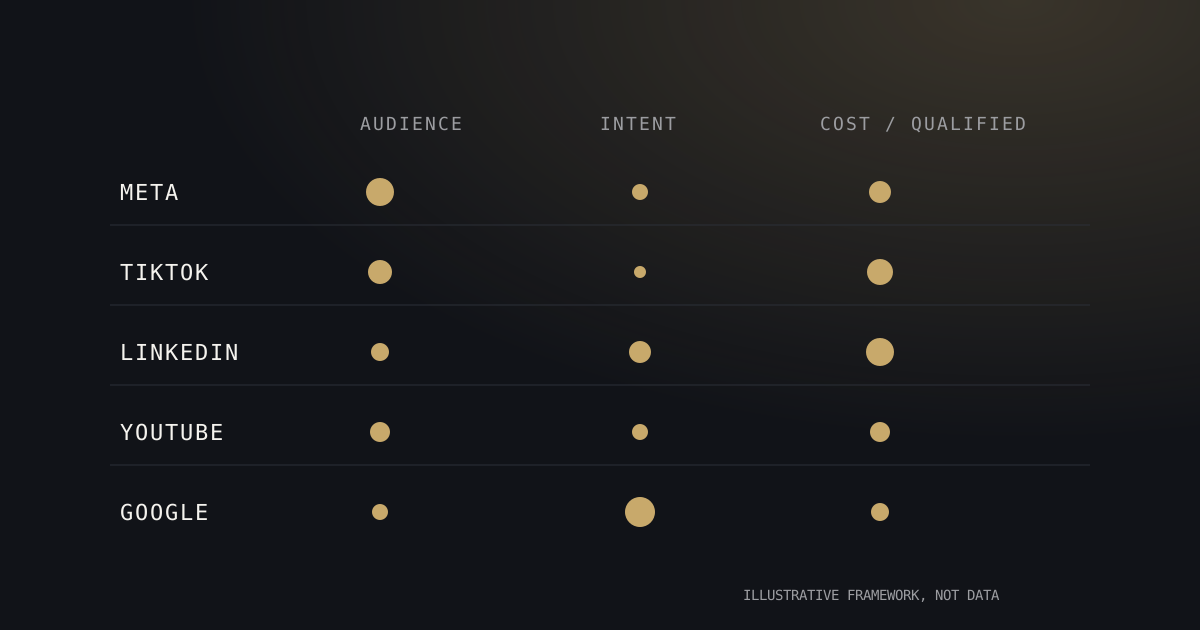
If you are also deciding where to advertise, read how to choose the right social media platform for your brand.
Frequently asked questions
Is AI targeting better than manual targeting on Meta Ads?
Neither is better in every case. AI targeting tends to work well when conversion tracking is reliable, the objective is right and there is enough data. Manual controls help in niche markets, when targeting restrictions apply or when data is thin.
What does human-led, AI-assisted advertising mean?
People define the ideal customer, offer, measurement framework and success criteria. The platform AI then helps with delivery, analysis and optimization within those boundaries.
Why is a qualified lead worth more than a click?
A click shows activity. A qualified lead fits your budget, need and location, so it can become a customer. Only the latter connects directly to revenue.
How can I tell if automated targeting is attracting low-quality traffic?
Compare lead quality in your CRM against platform reporting. Rising lead volume with falling qualified lead rates, short sessions or unreachable contacts are common warning signs.
Examples in this article are illustrative. Results depend on offer, market, budget, tracking and sales process, and are never guaranteed.
← Back to all articles