When results dip, the temptation is to change something immediately: a new audience, a bigger budget, fresh creative, a different bid strategy. Often several at once. A week later nobody knows what helped or hurt. Learning how to optimize digital advertising campaigns properly means replacing reaction with a process.
Campaign optimization is a structured, data-driven discipline. This framework works across Meta Ads optimization and Google Ads optimization, and for most paid advertising strategy decisions.
Step 1: Define the business objective
Awareness, traffic, lead generation, purchases and profitable customer acquisition are different goals, and they need different campaigns. An awareness campaign judged on leads will look like a failure. A lead campaign judged on reach will look like a success while the pipeline stays empty. State the objective in business terms first, such as qualified enquiries at a cost that leaves a healthy margin, then choose the campaign objective that matches.
Step 2: Verify conversion tracking before making decisions
Optimization decisions are only as good as the data behind them. Before touching a campaign, check that conversions are recorded accurately. Depending on the website and advertising setup, that can involve:
- Google Tag Manager to manage tags in one place.
- Google Ads conversion tracking and GA4 events.
- The Meta Pixel and, where appropriate, the Conversions API.
- CRM integration so lead outcomes can flow back to your reporting.
- Testing each conversion event end to end, including duplicates and missing fires.
The right implementation varies by site and platform. If tracking is uncertain, that is the first job, which is why we offer tracking and measurement work.
Step 3: Establish a baseline
Record the starting point for spend, impressions, CPM, CTR, CPC, landing page conversion rate, cost per lead, qualified lead rate, customer acquisition cost and ROAS where applicable. Without a baseline, you cannot tell whether a change worked or the market just moved.
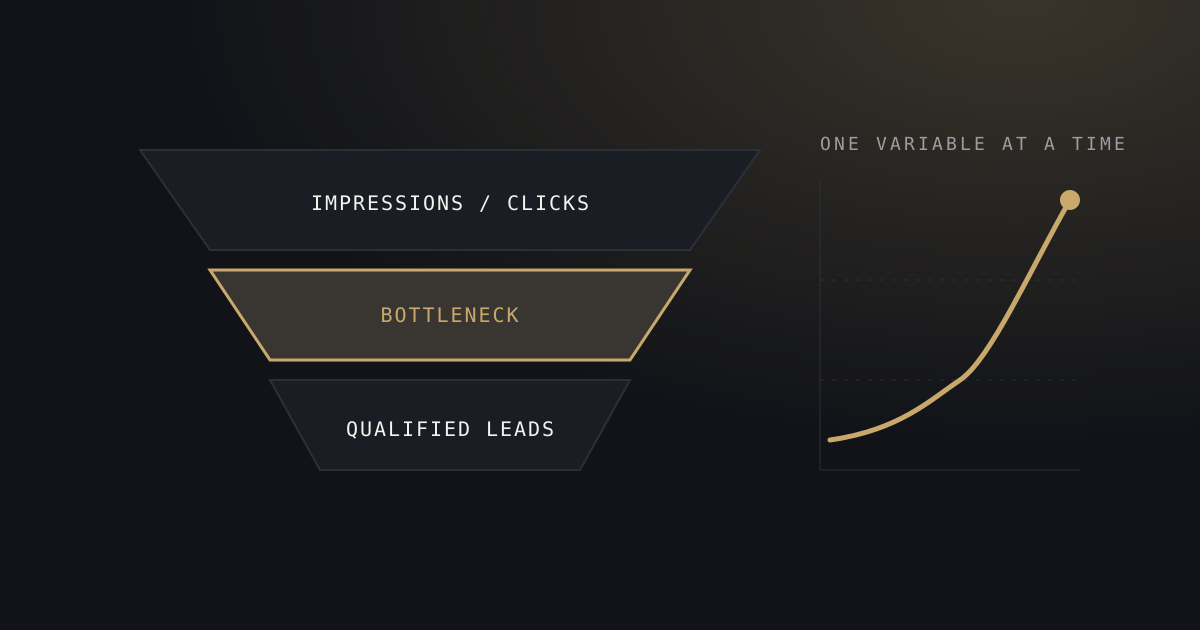
Step 4: Identify the actual bottleneck
Performance problems sit at specific points in the funnel. Diagnose before you act.
| Pattern | Possible causes | Next action |
|---|---|---|
| High impressions, low clicks | Weak hook, irrelevant audience, creative fatigue | Test new hooks and review audience relevance |
| Many clicks, few landing page visits | Slow page, tracking gaps, accidental clicks | Check page speed, click-to-visit gap and tracking |
| Good traffic, poor conversion rate | Message mismatch, unclear offer, long form | Align ad and page, simplify the form |
| Plenty of leads, poor quality | Broad objective, low-friction form, wrong audience | Add qualifying questions, refine signals and exclusions |
| Good leads, few sales | Slow follow-up, sales process, offer fit | Review CRM data and response times |
| High acquisition cost, reasonable conversion rate | Competitive auctions, low order value, weak margin | Review offer economics, bidding and audience quality |
Step 5: Optimize one meaningful variable at a time
Creative, hooks, headlines, offers, landing pages, audiences, placements, bidding strategies and campaign objectives can all move results. Change several together and you cannot attribute the outcome. Pick the variable the bottleneck points to, change it, and observe. Larger structural changes may be unavoidable, but record exactly what changed and when.
Step 6: Use A/B testing correctly
A/B testing ads only works with discipline. A sound test has:
- A clear hypothesis, such as "a more specific offer will increase qualified lead rate".
- One success metric defined before the test starts.
- Comparable conditions, with the same audience, budget logic and timing where possible.
- An adequate observation period for your sales cycle and delay in conversions.
- Enough data to support a decision.
Do not declare a winner after a handful of clicks or conversions. Small numbers swing widely, and early leaders often fade.
Step 7: Make budget decisions based on evidence
Scale when the campaign delivers qualified results at an acceptable cost and tracking is trusted. Maintain spending when results are stable but the evidence is still thin. Reduce budgets when cost rises with no improvement in quality. Pause when a campaign misses its objective after a fair test. There is no universal budget-increase percentage or learning period that fits every account, so judge by your conversion volume, platform behavior and sales cycle.
Step 8: Optimize for lead quality and revenue
Platform dashboards show what the platform can see. CRM feedback, qualified lead rates, sales conversion rates, customer acquisition cost and revenue attribution reveal what it cannot. A campaign with a higher cost per lead can still be the more profitable one if its leads close. This is why our view on human targeting vs AI targeting keeps coming back to outcomes beyond the dashboard.
Keep in mind that conversion attribution reports which ads were credited, not whether they caused the result. It is not causal incrementality proof, so treat platform numbers as evidence to weigh alongside CRM and revenue data.
Step 9: Build a repeatable optimization schedule
Daily
- Check spend pacing and delivery for obvious errors.
- Confirm conversions are still recording.
- Scan for disapproved ads or budget limits.
Weekly
- Review cost per lead, CTR and landing page conversion rate against baseline.
- Add negative keywords and review search terms in Google Ads.
- Check creative performance and fatigue.
- Review lead quality with whoever handles the leads.
Monthly
- Compare qualified lead rate, customer acquisition cost and ROAS.
- Review budget allocation across campaigns and platforms.
- Plan the next tests and retire what failed.
- Audit tracking again.
A hypothetical example: clicks without conversions
All numbers below are hypothetical and for illustration only.
Imagine a lead-generation campaign for a professional services firm. It spends $2,000 in a month and gets 1,400 clicks, but only 14 recorded conversion events, and just two look qualified. The diagnosis would run in order.
- Tracking. A test shows the form event fires twice for some submissions. Fixing it shows those 14 recorded events were nine unique leads after de-duplication, so the baseline was inflated.
- Messaging. The ads promise "free advice for everyone", while the firm serves a specific business type. Rewriting the hook to name that audience reduces unfit clicks.
- Landing page relevance. The page leads with generic credentials. Moving the specific offer above the fold aligns it with the ad.
- Lead qualification. Two short form questions on company size and need filter out poor fits, and the team starts tagging lead outcomes in the CRM.
The hypothesis is that these changes would produce fewer leads but a higher share of qualified ones. That is a hypothesis to test, not a promise, and only CRM outcomes can confirm it.
Campaign Optimization Mistakes That Waste Advertising Budget
- Changing several variables at once and learning nothing.
- Optimizing from broken or duplicated conversion data.
- Judging tests on too few clicks or conversions.
- Chasing the lowest cost per lead and ignoring lead quality.
- Scaling budget before the economics are proven.
- Ignoring the landing page and blaming the audience.
- Skipping the review schedule until performance falls.
Conclusion
Effective campaign optimization starts with accurate tracking, identifies the real bottleneck, tests informed hypotheses and measures commercial outcomes. It is slower than reacting to every fluctuation, and far more reliable.
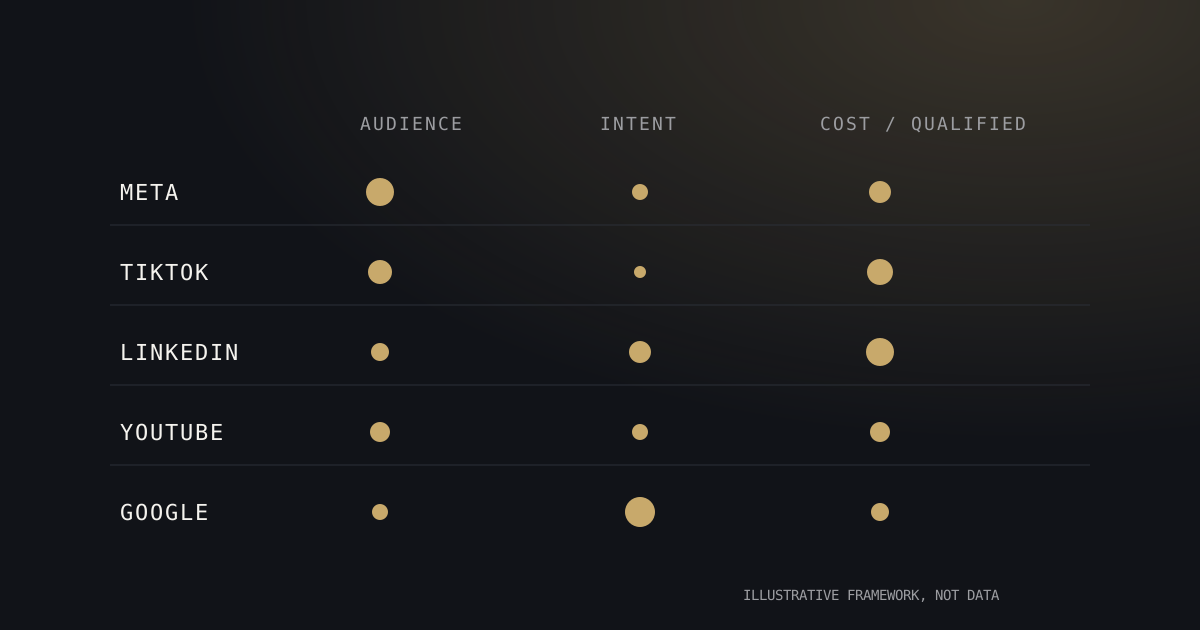
Wondering whether your platform mix is right? See how to choose the right social media platform for your brand.
Frequently asked questions
How often should I optimize my ad campaigns?
Check delivery and tracking daily, review performance weekly and assess strategy monthly. Avoid large edits between reviews unless something is clearly broken.
How long should I run an A/B test?
It depends on budget, conversion volume and sales cycle. Run it long enough to gather meaningful data and cover conversion delays, rather than following a fixed number of days.
What should I check first when leads are poor?
Verify tracking, then compare the ad promise with the landing page and review lead quality in your CRM. Qualifying questions on the form often help.
When should I increase an ad budget?
When the campaign produces qualified results at an acceptable cost and tracking is trusted. There is no universal percentage that suits every account.
Examples in this article are illustrative. Results depend on offer, market, budget, tracking and sales process, and are never guaranteed.
← Back to all articles